All posts by stuervay

SERVICE AND COURAGE

In a previous post I discussed service and humility. Defining humility not as a condition of meekness or subservience. But the willingness to be a dynamic force, even a change agent, without expectation of acknowledgement or reward. 

Humility is the opposite of deferential compliance. Which is meeting expectations of those who have found ways to exercise dominance over others. To remain docile and even emotionally paralyzed when encountering the juggernaut of political preferences or managerial power.

I am in the process of converting the blog, newlearninginfrastructure.com, into a book manuscript titled The New Learning Infrastructure: Educators with the Courage to Reform Local Schools. As I wrote the blog and prepared the book manuscript, many courageous educators who inspired me came to mind.

Four of them were and still are my greatest source of inspiration. Who they are and reasons why they inspire me in the realm of authentic school reform:

Doug Christensen, Commissioner Emeritus Nebraska Department of Education

Nebraska’s STARS (School-based, Teacher-led Assessment and Reporting System) is an assessment and reporting system created to support efforts to improve the local schools of the state. The foundation of STARS was three dimensional: (1) originates in the classroom and at the school-level, not the state level; (2) focuses on teaching and learning, not test scores; and (3) provides the data and evidence to support the work of educators and policymakers in improving the quality of decision-making and improvement initiatives.

STARS and its minimal “regulations” built partnerships between the state and the local schools to strengthen curriculum, instruction, and assessment for improved student learning. The STARS system used a different set of philosophies, policies, and practical ideas than the federal No Child Left Behind initiative. Resulting in conflicts and uneasy compromises which have taken center stage since 2001.

Doug Christensen courageously fought imposition of the federal mandate, eventually needing to compromise in order to receive federal funds for discretionary school improvement. Nonetheless, Nebraska was the last state to accede to federal pressure to receive ESEA support. Elements of the STARS program still exist in Nebraska. 
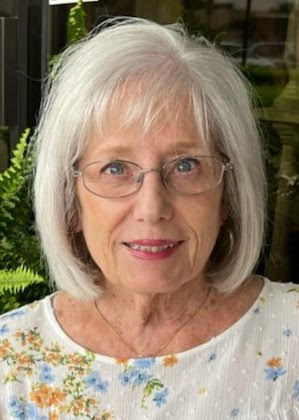
Carol S. Roach, President Emeritus Chairman, Board of Directors Curriculum Leadership Institute

Courage is best reflected in the willingness to accept significant challenges, even when circumstances are vague and not especially promising. It is more remarkable when the ongoing effort to achieve results is full of obstacles and complicated problems. Problems like client acceptance of new ideas and strategies. Significant changes in personal and organizational behaviors.

Carol Roach authored and implemented excellent public school curricular guides for law-related education. She worked closely with the Kansas Joint Commission on Public Understanding of the Law. She later created a series of effective training workshops for community college extension programs, businesses, and public agencies, known as Effective Methods of Teaching/Training Seminars. In 1991 she was co-founder of the Curriculum Leadership Institute (CLI). She co-authored The Curriculum Leader book and dozens of other materials used by public schools throughout the United States and overseas. Carol conducted workshops in hundreds of locations and was a consultant to many school districts and other educational entities such as consortia.

Every project Carol led involved courage to advocate out-of-the-box thinking and acting. Most important is her service as role-model to those now employed by or associated with the Curriculum Leadership Institute. After 30 years, CLI continues to provide nationally recognized nonprofit assistance to the nation’s schools. Carol’s legacy is exceptional. Unparalleled service based on courage and unselfish dedication.  

Dan Lumley, Retired District Administrator Researcher, Motivational Speaker, Change Agent Kansas and Missouri / National

Courageous service is often a product of a leader’s fascination with history and the exploration of the “what ifs” of human existence. Often those thoughts result in exploring ideas that serendipitously seem to work for no predetermined reason. Something like Arnold Toynbee’s observation, “History is just one damn thing after another.” 

The genius of Dan Lumley’s courageous service is detailed in his leadership of curriculum and instruction in three school districts in Kansas and Missouri. His fascination with how people interact intellectually, thereby becoming more engaged and motivated. Dan’s service is also based on an ability to give the ordinary a novel and even humorous twist. A skill that makes students and his workshop attendees see the world through a different lens. Difficult to write into a public-school curriculum because it is anything but unidimensional with just one correct answer.

Dan’s approach to learning aligns well with the new emphasis on creativity as being the preeminent learning outcome in the new Taxonomy of Educational Objectives. Today’s learning theorists avoid the term “learning objectives.” They view learning as a dynamic process, more suitable to 21st century work and living. Dan has advocated that idea for decades, which stimulates students and fellow educators to become more than they thought was possible.
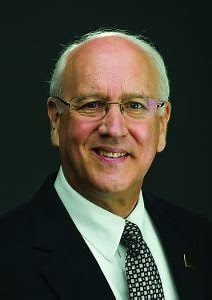
Ken Weaver, Dean Emeritus The Teachers College Emporia State University

In 2010, the Kansas State Department of Education sponsored a committee that wrote Teacher Leader Standards. School district support was sought for teachers to defray expenses of earning the endorsement and a $1000 permanent addition to base salary provided by the legislature. Ken Weaver ensured that Emporia State University would be the first to sign on to the project by offering a teacher leader endorsement. Although lack of funding caused by the 2009 recession stopped project development, ESU continues to have an area of concentration in teacher leadership. Five “domains” that emphasize professional collaboration in using research to improve teaching, learning, and use of data for school improvement.

Although the original project is dormant, Ken’s interim leadership of the National Teachers Hall of Fame is now connected with the National Network of State Teachers of the Year. A strategic plan built on teacher leadership. Ken encourages the members of the National Teachers Hall of Fame to use their NTHF platform to elevate the awareness of the bold initiatives they established as dynamic and creative teacher leaders to change schools.

Ken has provided courageous service in previous endeavors as a Peace Corps volunteer, public school teacher, professor of educational psychology, department chair, and college dean. All those contributions bode well for his exercise of leadership in an organization that for 30 years contributed much to the betterment of American schools. And is poised to do even more in the years ahead.

*********************

These four educational leaders demonstrated and continue to provide dynamic service. As opposed to passive and compliant ministrations.

“Dynamic” has many synonyms that underscore its power as an action. Among them are forward-looking, energetic, vital, and vigorous. I add other descriptors that incorporate creativity, essential problem-solving, and incisive sensitivity that result in finding new solutions to perennially perplexing problems.

And above all the courage to assert themselves as people who give their everything to making a significant difference.

©2022 Stu Ervay – All Rights Reserved

SERVICE AND HUMILITY

Service and humility are often used in the same sentence. Associated with Christianity. And the world’s other great religions.

Humility is the opposite of pride. Self-effacing service that expects nothing in return. Not even recognition of sacrifices made on behalf of others.

Modesty is a word often cited as a synonym for humility. Modest people do not work for recognition or praise. They offer their service as a personal gift to fellow human beings.

While I understand the differences between pride and humility, the issue has often confused me. For example, how can someone who is known as an ambitious politician morph over time into a respected and revered statesman?

Consider Abraham Lincoln.

Lincoln started as an ambitious railroad lawyer who found ways to rise in government. To weave through the pre-Civil War political minefield astutely enough to be noticed. Then nominated by a new Republican Party as a presidential candidate who opposed the expansion of slavery.

Lincoln was smart and courageous. He made controversial decisions and pushed them through. It was after his election that humility emerged, brought about by authentic anguish and suffering. The scope of the problem he inherited almost overwhelmed him. But he persevered through depression and anxiety. Rose to the occasion, thereby preserving the union he cherished.

Myths are generated to convince later generations that paragons of virtue, self-deprecating and unpretentious, always emerge from human ordinariness to lead. But even Christ did not do that. He was noticed not because of his humility but through the demonstration of his extraordinary gifts, bestowed on him by God, his father.

I enjoy reading about Winston Churchill. He was anything but humble and did not apologize for it. His literary and oratory barbs on the subject are legendary. Churchill once quipped, “My political opponent is a modest man with much to be modest about.”

What made Churchill so amazing was his ability to see things as they really were. Then he had the courage to act in accordance with needs of the time. In so doing, Churchill made some horrible mistakes. But he also saved his nation from Nazi conquest. Through stubborn self-confidence and risk-taking convictions, with humility nowhere in sight.

But humility existed in Churchill’s psyche. He expressed guilt for asking the people of Great Britain to accept extreme hardships—to save themselves from conquest. From the kind of despotic rule that would ruin centuries of democratic growth.

Saint Francis of Assisi is often cited as the Christian example of humility. But he was not just an invisible monk doing the Lord’s work in isolation. In fact, he started life as a wealthy and vain young man. His subsequent experiences converted him into the self-sacrificing ways he ultimately accepted. And vigorously advocated.

Sanit Francis used skills from his earlier days to create an influential order known as the Franciscans. What makes Franciscans effective is their leadership initiative. Never meant to gain wealth for themselves, but to better serve others.

Richard Rohr is a famous Christian author, speaker, and Franciscan priest. Rohr is a strong spiritual leader, not because of a presumed humility. But because he powerfully advocates better ways of becoming and living. 

His writing and speaking come from a kind of boldness much like the Hebrew word, “chutzpah.” Rohr is sometimes criticized for his beliefs, particularly associated with the meaning of the Trinity. But he persistently hammers home the points he advocates.

He is anything but meek and lowly—two other words often associated with humility and modesty. As taken from the Beatitudes, “Blessed are the meek for they shall inherit the earth.”

The most common interpretation is that we should all avoid furthering our own agendas. Rather, trust in God to direct the outcome of events. To obey God’s will.

But the word obey should not mean utter submissiveness and timidity. That interpretation of ”obey” can be comforting to some who follow God’s commandments. But it can also be used to allow a few human beings to dominate others. To advance their own ambitions. Not God’s. 

Human beings who wish us to obey want us to be loyal. Loyal to their vision as to who we should be, and what we should do. A few of them suggest that loyalty to them is tantamount to being loyal to God.

Some politicians use that same rationale about patriotism, that being loyal to them is truly patriotic.

That is despotism, which has been used to destroy much of the world. And is now being used in Russia. It has nothing whatever to do with God’s will.

Compliance is another word for submissiveness. Usually applied as a legalism in the military or business world. With implications associated with servitude. To do what one is told.

Another blog I have written, soon to be a book, addresses how top-down directives have ruined American schools. Check out: newlearninginfrastructure.com. I suggest ways courageous local educators can cease being compliant civil servants in ways that diminish and even distort real student learning.

******************

Service to our world is sustained by courage. Jesus Christ demonstrated the ultimate kind of courage. He was crucified because he would not comply with erroneous directives coming from authority figures, or even the societal norms in which he lived. He was loyal only to God, his father. His humility was found in an advocacy that was not self-serving. But sacrificial.

Service based on true devotion to God has nothing to do with subservience. Or merely obeying God’s wishes as interpreted by those who profess to know them.

Service is dynamic and relational. It is based on continuing study and interacting with others. With the role of humility connected to careful listening and contemplation.

That is the essence of learning. Ongoing learning is the foundation for providing effective service. With humility associated with the acceptance of not knowing. And the need to seek greater wisdom every day.

©2022 Stu Ervay – All Rights Reserved

ORGANIZATIONAL SERVICE

When volunteering I try to follow-through as promised. Sometimes circumstances get in the way, but my motives remain intact.

Service through volunteerism is the way thousands of Americans give purpose to their lives. A link to idealism and even altruism. Giving can be so valuable when in concert with others of like mind.

Most volunteering is community or church-based. Sometimes big enough to be especially significant and inspiring.

In the spring of 1961, John F. Kennedy announced the formation of the Peace Corps. The idea had been discussed for a decade. Walter Reuther, president of the United Auto Workers, suggested it.

During the 60s era, service was highly valued. Hubert Humphrey and other politicians actively promoted the idea.

America’s success in World War II, the occupation of defeated countries, and the involvement with the community of nations was causing us to be known as “The Ugly Americans.” 

Something authentic needed to change that perspective.

Kennedy was sold on the idea. He announced the Peace Corps’ formation in March 1961. Two months before I was scheduled to be sworn in as an army officer.

Talk about bad timing.

Peace Corps objectives aligned with my ideas about service much better than military involvements. But my options were nonexistent.

I did not discuss my bewilderment with anyone. Because I thought my unsettledness was unique. Even strange.

But that was not true.

One of my fellow ROTC students withdrew from the program. He had become a conscientious objector based on growing religious convictions.

His decision caused a ruckus, because he was offered a regular army commission. How could someone who declared allegiance to serving the USA as an accomplished military leader just drop out?

But that action was not unusual.

Some fourth-year classmen at our nation’s military academies also withdrew just before graduation. Such actions usually resulted in a compromise. After the cadet had been subjected to intense pressure to recant.

I did not have that kind of courage.

My call to the Peace Corps office in Washington, D.C. did not help. I was told to call again after fully completing my military obligation. But not to expect an encouraging response.

Peace Corps service was nothing like being a military leader. I would have been trained thoroughly in the language and culture of the nation or area to which I would be assigned. Given instructions on how I could be of specific service. Expected to commit two years to that effort.

The route I took was probably the most logical. Albeit disturbing.

The 1960s Peace Corps was called “the toughest job you’ll ever love.” Tough on many levels: culture shock, difficult (sometimes dangerous) living conditions, loneliness, and problems joining the American workforce after returning.

I have heard Peace Corps veterans talk positively about their experiences. Their service benefitted others in the world and changed them as Americans. Made them more aware of how much we have.

It gave them a sense of humility. Made them more aware of the need for a domestic peace corps—now called AmeriCorps.

General Colin Powell’s nonprofit, America’s Promise Alliance, is another service organization. The APA serves parts of the United States many want to avoid. Pretend does not exist. Disparaged because its people are believed to be insufficiently ambitious. 

Thought to be poor because they are lazy and prefer to live “on the dole.”

But Powell’s efforts after retirement were meaningful to me. His work in founding America’s Promise Alliance is as important as any of his military and government accomplishments.

Powell’s outlook is something to which I can identify. He was commissioned into the Army out of ROTC three years before I. He decided to make it a career. But Powell never lost sight of his background and the social needs prevalent in our American population.

******************

Five years ago, I had to admit my beloved wife of over 50 years into a memory care facility. She had Alzheimer’s and became debilitated enough that home caregiving was not possible. I sold our home and moved into a villa. And lived alone. Remembering with sadness my wife’s observation that “Home is where we are together.”

I called the villa “a way station.” Certainly not “home.”

Before COVID struck I could visit my wife daily at the memory care unit. And I discovered a group of neighbors with whom I socialized outdoors.

But her dementia grew worse and COVID hit. I relied on my family and church. Those people helped. But I needed more.

I sought a writing coach to help me use that medium to cope. Found an excellent one in R.J. Thesman. I also looked for a service organization to join and discovered AARP Kansas. In a few months I was serving on that organization’s Executive Council.

Service through writing and membership of a recognized nonprofit organization helped by being positive distractions. Family and friends contributed much to my feelings of purpose.

But a hole in my life remained.

Writing and AARP helped in the sense of organizational affiliation. But I learned that meaningful service is best when shared with one other special person. A partner or sidekick.

A spouse.

And mine was fading away into the fog of dementia.

©2022 Stu Ervay – All Rights Reserved
REAL SERVICE — MORE THAN THE PURSUIT OF HAPPINESS

We hold these truths to be self-evident, that all men are created equal, that they are endowed by their Creator with certain unalienable Rights, that among these are Life, Liberty, and the pursuit of Happiness.

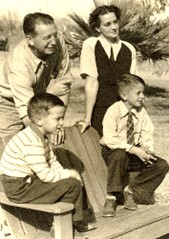
Ervay Family in 1946

“In the pursuit of happiness” is probably one of the most perplexing Thomas Jefferson phrases. Even more confusing when combined with “life” and “liberty” in the Declaration of Independence.

In previous blog posts I have suggested that joy and happiness are not synonymous. Regardless of what the dictionary states.

Happiness: a superficial and momentary giddiness caused by a temporal sensation. A warm glow after attaining physical pleasure. Opening a bag full of money. Receiving a compliment. Winning a game.

Helping people be superficially happy does not require much service. Gifts, smiles, hugs, and unexpected expressions of admiration meet the goal.

Teachers are told students will be happy when given positive reinforcements. When they correctly answer questions and comply with instructions.

Positive reinforcement is supposed to make students feel better about themselves. Resulting in good academic performance.  If the student feels the compliment is authentic and respects the teacher’s opinion.

But it never results in lasting happiness or joy. It is too manipulative. It does not engage students intellectually or emotionally. It is only a booster to stimulus-response.

Among adults, the constant pursuance of temporal happiness is addiction to warm fuzzies. Defining “life” as the “liberty” to continually pursue something that brings fleeting comfort. What feels good now.

Is that what Jefferson meant? I hope not. Although millions of Americans may believe that interpretation.

***********************

When I was a teenager my life away from school was based on a fascination with machinery. Especially motorcycles. A good life meant seated on a fast motorcycle. The liberty to go anywhere to make me momentarily happy. In the desert and mountains around Phoenix.

I often felt free and unhindered. Exploring regions unknown to me. Sitting atop vistas with a warm wind in my face and an amazing landscape below. My imagination could go wild. That kind of life and liberty seemed an everlasting source of happiness.

Unfortunately, some fellow students found different kinds of life, liberty, and happiness. Alcohol, drugs, and questionable forms of behavior were popular pursuits. Those who indulged felt just as free as I. But often paid a heavy price.

In time, I realized my freedoms during those years were not enough. Life, liberty, and happiness could better be associated with exploring new worlds and ideas. Meeting different people. Accepting and mastering new challenges. Becoming more complete than sitting on a motorcycle seat.

Not so true with many of my friends. We lived in a free country. Even unlawful behaviors could be accepted as teenage mischievousness. A rite of growing up.

Which opened to even greater freedoms and indulgences in adulthood.

The era in which I grew up, as positive as it was, contained interesting stereotypes. Rebel Without a Cause was depicted teenage angst and rebelliousness. It seemed like an American rite of passage. Which morphed into a psychedelic revolution with dramatic opposition movements. The Vietnam conflict and military draft. What many considered unwarranted restrictions on their life, liberty, and pursuit of happiness.

While society around me seemed to unravel in the 1960s and beyond, I finished college. Participated in military activities not associated with Vietnam. Married and taught school. A motorcycle-based aimlessness was not for me. Finding ways to provide service was a better direction.

But some considered my kind of service as too straightlaced. Uptight.

I began to believe that life, liberty, and the pursuit of happiness had boundaries. Not rigid boundaries. But within a framework of long-term meaning and life-affirming principles.

My kind of service was channeled into the field of education. Specifically, into a search for what makes human beings intrigued with curiosity and reasons for existence. The meaning of life. How we should use the liberty we have been given as American citizens.

That little nugget in my brain might have been influenced by my father.

Dad talked about the qualities of a good spouse, so I followed his advice to the letter. It turned out to be a great suggestion!

He also said I was deficient as a carpenter or mechanic. I should consider other pursuits. A little disappointing, but I got over it.

He held a mediocre understanding of how to achieve any kind of elevated status in American society. He did not live in those circles. And did not have that kind of ambition.

But Dad was always messing around with the “what ifs” of life. Curious about everything. He could not explain where that intense curiosity came from.  He was raised in New York, a state full of 19th and early 20th Century inventors. Some at Cornell University, near his birthplace.

In his later years Dad discovered entrepreneurship. He researched how retired people could serve society. Instead of sitting on park benches or playing shuffleboard and bridge. He wrote articles and gave speeches. Counseled retirees in ways they could dig up buried dreams, then act on them.

The Maricopa County Area Agency on Aging liked Dad’s ideas and sponsored his services. He motivated me to start a gerontology studies program at Emporia State University in Kansas where I had become a professor.

Dad showed through example how to serve the goals of life, liberty, and the pursuit of happiness. In the context of real meaning. His organization, Retirement Achievements, gave him some level of joy through serving. Unfortunately muted, then lost with his advancing dementia later in life.

But that legacy gives me joy and the inspiration to tell Dad’s story. My family’s story—and mine.

©2022 Stu Ervay – All Rights Reserved

SERVICE AND THE ROLE OF GUNS

This blog post is hard for me to write. Not because it will be seen by some as controversial or depressing.

But because the subject is in the news every day. Presented to us as America’s unique and devastating problem.

In July of 1952, I was 14. Living in Phoenix and ready to attend high school. Feeling the intense heat of a desert summer, dwelling in a house with no air conditioning. Only evaporative (swamp) coolers.

But I was excited about the pending visit of my grandfather and step grandmother from New York State. They had lived in Phoenix for two years. Now returning for a visit.

Grandpa was an impressive guy. Handsome with a full head of graying hair he cut himself. Muscular with a rich tan. An analytical way of thinking that revealed a high degree of intelligence.

Everything he did or thought about was meticulously done. Even his handwriting looked like ancient calligraphy. One of his favorite pastimes was studying the dictionary.

He was a Mason and could recite pages of Masonic ritual. He loved practical mathematics like geometry, highly regarded in Masonry.

His self-discipline seemed impeccable. He occasionally smoked a pipe but would set it aside for months. He would eat what he needed, then stop when he thought he should. Upsetting my mother when so much food was left on his plate.

His mode of dress in Arizona was “western.” Because he loved the cowboy mystique of early day Phoenix. His attire was always impeccable. He took fastidious care of his 1949 Cadillac and the property surrounding the house he bought in 1950. Sold it two years later to return to New York.

They left Arizona, because my step grandmother hated the heat and life in a growing desert metropolis.

During the 1952 visit, Grandpa wanted to explore the possibility of returning to Arizona. My step grandmother loved Upstate New York. She had been raised by her father, a prominent merchant and community leader. She had inherited property and money. Grandpa accumulated only modest holdings from farming and a retail business.

In the first day of their visit, Grandpa gave me an ancient single shot 25-caliber rifle. He owned it when he was a boy. I was elated. Placed it in the closet of the bedroom my brother and I shared.

The next morning, the rifle was missing. My brother said he had not taken it. So I went to the kitchen. Mother and my step grandmother were chatting. My father had already left for his job. Grandpa was not in the house.

I went out the back door to see if Grandpa had gone to our workshop we called the “shed.” As I approached the shed, I saw my Grandpa lying in a pool of blood.

He had clamped the rifle into a bench vice and used it to shoot himself in the head.

No note was left. Just a diary in which he said he was depressed about turning 65. He didn’t want to face the inevitable aging deterioration. He dreaded leaving Arizona for the cold and gloomy New York winter.

My Grandpa’s suicide made me both angry and depressed. This was an era in which guns were glamorized in movies. Western fantasies about gun fights were prevalent. How could this gun, this gift, actually kill?

As I looked into my Grandpa’s open casket, I could not find the bullet hole in his head. The mortician arranged his abundant hair so no wound could be seen.

The police kept my rifle. I did not want it.

Over the years I realized Grandpa suffered from a psychological condition called obsessive-compulsive disorder. OCD diagnoses have existed for centuries. But only recently have they been classified as a medical dysfunction.

**********************

My relationship with real guns—with real bullets that can kill—started with my Grandpa’s suicide. With the rifle he gave me. In a shed where my father, brother and I spent many happy hours building and fixing things.

After that summer I enrolled in Phoenix Union High School. A large campus in the middle of the city. In those days Junior ROTC was a required program for freshman and sophomore boys. Each of us were given modified M-1 Garand rifles for training and drilling. The 1936 rifle was the model most used by the U.S. in World War II.

I was taught to disassemble and assemble the M-1 blindfolded. How to clean it thoroughly. I occasionally fired it in an indoor range. We were shown Army training films that explicitly told us how to use the rifle to kill the enemy.

Although I was still deeply affected by Grandpa’s suicide, I accepted my early military training. That was the way the world worked. Even with somewhat weak eyes, I became a good shot. Proud of my ability to participate in the manual of arms drill. Learned to be a good young soldier. Given the rank of Cadet 1st Lieutenant in my senior year.

A week after high school graduation I joined the Army and attended basic training in California. A special program called the “Reserve Forces Act.” After six months of active-duty training, I became a part-time soldier in a quartermaster unit based in Phoenix.

My parents encouraged me to follow that path to avoid the draft.

After the six months of active duty, I attended a local community college and participated in weekly army drills. I disliked the drills. They seemed like meaningless busywork. The same was true with summer camps.

I transferred to Arizona State University where a friend talked me into enrolling in Advanced ROTC. Completing that program would give me an officer’s commission in the Army. It seemed a good career move.

It was a good career move. But upon graduation I was assigned to armor. Tanks. Machines designed to intimidate and kill with considerable efficiency.

I was trained to be a tank unit commander and performed my duty to the best of my ability. Although I disliked the duty, I tried my best to be a good military leader. I was good at it. In tactics, weaponry, and leadership.

 To serve my country as expected.

But the longer I served the more disgusted I grew with the idea and practice of war. How obscene the machinery of war became. 

Even after receiving awards for my proficiency with tank weapons. Recognized for my skill at tactics. Even after becoming a captain and company commander.

Every day I served, Grandpa’s suicide haunted me. It still does.

Guns are just killing machines. The public’s fascination with guns is destroying the country I offered my life to serve. School children and other victims. Killed by military style assault weapons available on the open market. Killed by handguns owned by millions.

I despise our fascination with the weapons that kill us. And I accept that declaration as a form of service. To pass gun laws that make sense. To work to save the lives of our fellow Americans.

©2022 Stu Ervay – All Rights Reserved

SERVICE AND THE JOY OF MAKING A DIFFERENCE

Barbara Ervay

1940-2021

According to David Brooks, New York Times columnist and author, there is a difference between living a happy life and one filled with joy.  Joy is said to come from serving others,

Douglas Abrams’ book about the relationship between the Dalai Lama and Desmond Tutu underscores that point.

And that serving oneself is never a source of true joy.

A kind of contentment or happiness comes from sharing in the love of our families and friends. We can be fulfilled in minor ways by pleasant diversions some call a “bucket list.” 

We can revel in the little but significant things our earth shares with us:  aromatic flowers, scenic vistas, exotic and delicious food, the plethora of animal life, and the geological and plant diversity found on our wonderful planet.

Day to day contentment, happiness, and fulfillment are fundamental goals in life. They constitute a foundation for being human and part of a magnificent universe.

But they are not what marketers want us to believe when enticing us to buy products or services they offer. Their kind of conjured up happiness glitters with superficial facades, which are temporary kinds of euphoria at best.

They do not bring us joy.

*******************

Decades ago I was intrigued by research findings that discovered good salaries in a workplace do not make us happy.

Researchers found that good salaries and benefits make us NOT unhappy. But they do not make us happy.

And they certainly do not bring joy to our lives.

In other words, happiness has nothing to do with being not unhappy.

Not unhappy is a neutral middle ground or emotional void. It allows us to comfortably exist in a vacuum devoid of real meaning, or anything that transcends the routine of living.

The routine of living, with occasional blips of gaiety can make us think we are happy.  Especially if those blips are associated with people we love and enjoy being with.

Sometimes we feel giddy when winning prizes or receiving an unexpected award or sum of money.

But that feeling of euphoria is temporary. Never long-lasting or a source of ongoing contentment.

Somehow, we Americans have lost that insight and continue to inflate capitalistic notions that happiness is caused by the acquisition of more. The emphasis on the gaining of more creates a social dormancy, an unenthusiastic acceptance of the status quo that causes society to remain docile and submissive.  

That statement is no attack on capitalism.  Capitalism stimulates incentive and nurtures a dynamic marketplace, something socialistic countries cannot duplicate.  Ambition is, after all, a feeling that stimulates and excites.

But unfortunately, capitalistic enterprise can result in either euphoria or crushing depression.  And euphoria, as wonderful as it seems, leads to the need to acquire even more. And depression based on loss can either motivate or destroy utterly.

There is now a debate among advocates of capitalism. Mostly between those who favor the traditional stockholder system and others who advocate what is called the shareholder model. While the arguments are complex, the idea behind the shareholder concept is that people other than well healed investors should also benefit from company successes.

Even if that modification were possible, I doubt Desmond Tutu or the Dalai Lama would believe a remolding of capitalism would be enough to propel our society toward greater happiness. Certainly not joy.

Joy requires people to feel needed and authentically productive. That their purpose in life is to fulfill the needs of others in meaningful and authentic ways.

No revised status quo economic system can accomplish that, no matter how much it is reshaped.

******************

Archbishop Tutu and the Dalai Lama conversed about the role of suffering as a precondition to finding joy. Both have known great suffering along with remarkable successes in guiding millions of people in finding happiness. Even joy.

My understanding of their conversation took me to the word “empathy.” Empathy is much more than sympathy.

Sympathy is feeling sorry for someone else with no innate sense of what they are really going through.

Empathy is an understanding of the anguish or distress of another person because we have experienced something similar ourselves. As fellow human beings with the same physical, emotional, intellectual, and spiritual needs.

They hurt. We hurt with them, deeply and authentically. We are who they are, but in a place that is now better.

Because we survived our hurt and learned from it.

Barbara, my wife of 57 years, could be amazingly empathetic. A kind of empathy that grew as an extension of her own suffering. At age 14 she was diagnosed with epilepsy and experienced all its manifestations and limitations on a normal childhood. She understood the social agony of being different than others, and isolated because of it.

What astounded me about her condition, later controlled quite well with medications, is that her empathy extended far beyond a deep understanding of others with that disorder.

Barbara, while in college, could feel the distress and confusion of those who were in a dark place with no apparent exit. Fellow students with terminal conditions that would shorten their lives. Friends with deep spiritual convictions that were shunned by others because of those beliefs. Men and women who discovered in themselves a preference for physical intimacy with members of their own gender.  

After college graduation and entrance into the teaching profession, Barbara revealed that sense of empathy with students. Those who were abused at home. Those from poor families with inadequate food, shelter, or protection from the elements. Students who sensed they were different in ways unacceptable to society in general.

During her teaching and in later years, she realized our society often treated girls and women unfairly. So from that realization she worked tirelessly to give members of her own sex the opportunities and recognition they deserved. In schools. In churches. Everywhere women needed support to advance their own efforts to contribute, and thereby gain joy from the giving. 

To say that Barbara gained joy from her deep sense of caring for others, and serving them the best way she knew, seems on the surface to be overreach. Absolute nonsense.

But joy is multidimensional and hard to pin down. The emotional pain associated with empathy is also a source of realizing God’s purpose for our lives. The joy that goes deep into the soul is connected to our relational needs, that we are all made of the same stuff and feel the same way. With variations that enrich our collective personality and create cultural happiness.

The joy of living.

©2022 Stu Ervay – All Rights Reserved

WRITING IS A FORM OF SERVICE

Writing is not like my service in the military, classroom, university office, church, or work as an AARP volunteer leader. Not like my contributions as a consultant, workshop presenter, or association leader. 

Or the service I provide as husband, father, friend, and responsible member of the human family.

But I hope my writing is a service in helping others find their way through life’s challenges.

******************

Writing can be a service to self or a selected few. Through internal reflection. Penning or typing journals, diaries, confidential letters, and other documents that help us sort out individual problems or manage personally felt anguish.

That kind of writing is a conversation with the self or chosen others. Sometimes to be used later. Or for posterity. Using a medium that supplements memory, registers and acknowledges differences over time.

Service through writing requires introspection and the ability to connect personally felt human frailties and vulnerabilities with our transformational self. 

And with others of our species.

Especially those experiencing similar circumstances in life.

I wrote the book, Confronting Dementia: A Husband’s Journey as an Alzheimer’s Caregiver, to both soften my anguish and help other men who care for a wife with dementia. As a husband, I understood my inability to seek solace from others by sharing the depression and sense of helplessness I experienced. 

******************

I am no historian. But I enjoy reading historical biographies.

Especially intriguing to me are the writings of famous people also known for accomplishing other things. Like Benjamin Franklin, Rachel Carson, Winston Churchill, Jane Goodall, and Theodore Roosevelt.

My reason for favoring those writers is encapsulated by a portion of Roosevelt’s 1910 The Man in the Arena speech: “It is not the critic who counts; not the man who points out how the strong man stumbles, or where the doer of deeds could have done them better. The credit belongs to the man who is actually in the arena.”

Roosevelt sought out challenges and entered many arenas as an administrator, rancher, explorer, military leader, politician, president, and naturalist. He wrote extensively about all those experiences, which gave him credibility far beyond anything written by an uninitiated observer.

When I became a college professor my father congratulated me. But, using his own phrasing, he said something like George Bernard Shaw’s well-known line, “Those who can, do; those who can’t, teach.”

That hurt.

But it motivated me to advocate and practice something I called “applied scholarship.” Now recognized at Emporia State University as part of its service to our community and culture.

The idea behind applied scholarship is simple. Professors have a responsibility to better understand the contemporary world around us. To explain those understandings in the classroom. To identify and act on how to solve problems revealed by their new knowledge. In the real world. 

To share with students how the problem-solving initiatives worked. Or did not. And write about it in professional publications.

My father knew I also liked to write. He cautioned me in much the same way about that medium. As if to say, “Those who can, do; those who can’t, write.”

But in later years, when teaching plumbers, lawyers, accountants, and others how to teach in a community college extension program, it became evident that good teaching and writing are every bit as challenging as anything else.

Maybe more so.

People in those classes who could “do” were often unable to write a cogent paper, organize and present a good lesson, or deliver a convincing speech.

Many so-called experts in their fields can neither write nor teach well. One of my pet peeves is the technical expert who incompetently tries to write instructions for how to assemble or repair something. Or teach novices the same skill.

I could, if so inclined, make an equally dubious statement by reversing Shaw’s remark: “Those who can, fail to communicate their skills in any medium.” Teaching or writing.

But that stereotypical criticism would be fallacious for the thousands of practitioners who excel at both teaching and writing.

******************

America’s second president, John Adams, was often described as cold and arrogantly judgmental. True enough. Many of his policy and political writings reflected that side of him. But his core beliefs and vision of our American society were much more sensitive and refined when seen through the copious letters sent to his wife, Abigail.

Abigail, as reflected in their letters to each other, was John’s “better half” in upholding the rights of women and abolishing slavery. So, he also wrote eloquently on those subjects.

Much of what we consider to be uniquely American is based on the writings of others, like Adams, who founded the country. Especially Thomas Jefferson and Alexander Hamilton. Both men had personal flaws but were able to reach deeply into history, philosophy, and governmental theory to write documents that today are the bedrock of our national culture.

At a turning point in our nation’s history, Abraham Lincoln used the writings of Jefferson and others, supplemented with biblical references, to construct a powerful and iconic image of who we are and what we stand for as Americans.

*******************

Writing also changes who and what we are. For this reason, academic doctoral programs require dissertations. Preceded by the ability to come up with and explain an “intellectual itch that needs scratching.”

Many believe those who receive academic doctorates are just smart folks who take many more semester hours of coursework. And succeed in passing them with high marks.

But that is not true.

The prelude to conducting meaningful research and writing about the experience must be a kind of cognitive agitation. Because something is not right about a piece of our world.

Answers now given about those disparities are inadequate or nonexistent.

Doctoral research also requires a creative mindset to be effective. Asking the same old hackneyed questions will not reveal new knowledge. Devising new questions takes reflection, introspection, and time conjuring up “what ifs.”

And plenty of creative juices.

©2022 Stu Ervay – All Rights Reserved

CORRUPTING GOOD WORDS

The English language is an exceptional way to communicate. While I am no linguist, it pleases me to be able to use a language rich in meaning. Malleable in ways that allow emotions to permeate the soul. A stretch from precisely defining something to painting connotative images in a human mind. Images that allow the message’s recipient to imagine and create.

So how can we examine the word “commune” as a root word for both supporting and, conversely, undermining the word “service.”

To commune is good when it is extended to mean interaction, connection, and meaningful collaboration. We commune with each other and God. We communicate to better understand each other. We take communion to cement our relationship with God through Jesus.

It is central to everything good about service.

On the other hand, to be a communist or one practicing communism is interpreted by Americans as being evil. Inappropriate and even disloyal. We have been taught appropriately to believe that way. To perform the correct kind of service, one that opposes both communism and those who practice it on an international scale.

********************

In a previous blog post, I mentioned Dr. Zoya Malkova, a Russian citizen and educational leader. In World War II Zoya was a pursuit pilot for the USSR, shooting down Nazi planes. But she was much more than a national hero in the militaristic sense.

She became a marvelous public school teacher and education official in the nation’s bureaucracy.  

I became friends with Zoya after the fall of the Union of Soviet Socialist Republics (USSR), when she made frequent visits to the United States. The purpose of her visits was to explain to Americans what happens when a governmental system with a strong secular and pragmatic core collapses.

Zoya’s best analogy for Americans was as if our Constitution and government were tossed out. That everything we had been taught to believe is now disparaged. That George Washington, like Stalin, was a despot to be forgotten.

Questions asked by citizens of the now defunct USSR were hard to answer. The foundation of education was in disarray.

What is left for schools to teach? What is left for our families to celebrate? To what do we belong as a culture?

Such questions were hard to answer even before the USSR’s demise. The basic core of communism is economic collectivism, which can seem soulless and rigidly practical. Drab in regulated ways.

Even during the highpoint of the USSR’s existence, the ruling bureaucracy only marginally recognized the uplifting achievements of the union’s member nations. Their contributions in the world of literature, music, dance, and even technology.

Economic collectivism emphasized production and distribution of wealth. Believing in and becoming inspired by a gearbox in a tractor. By the statistics of industrial output.

The center point of national pride had less to do with what was valued spiritually or esthetically. National pride was based on industrial strength, military prowess after defeating Nazi Germany, and the expanding territorial achievements. Gaining dominance in nuclear and rocket science.

After the demise of the USSR the once mighty Stalinist empire, built on what remained after World War II, was real estate chopped into ethnic parcels of land. Pieces of territory reinvigorated traditional cultures that lived there. Or formed totally new cultures and nation states.

Zoya had belonged to the Soviet Communist Party. Not because of its allegiance to the teachings of Vladimir Lenin, or the dictatorial rule of strongman Joseph Stalin, but because she knew no alternative.

The political state ruled by the dictatorship of the proletariat (working class) was based on collectivism, an economic principle established by Karl Marx and Frederick Engels. German philosophers, political theorists, and economists who lived and worked in England.

Marx and Engels never thought their ideas would be co-opted by a massive empire like Russia, but Lenin did. Lenin sold the idea that those who do the work should reap the benefits of their labor. He created a political system based on that idea.

Starting with a strong central government (“temporary” dictatorship) to ensure the system was correctly established and maintained.

Communism took the idea of “commune” to new levels of economic principles and political infringement on a culture. Earlier communes like those established by indigenous people (and many American villages of the 18th and 19th centuries) were small and interactive. Often glued together with pervasive beliefs associated with things spiritual and life affirming.

Communism, as envisioned by Lenin in the context of a large nation’s needs, had to become both bureaucratic and rigidly based on uncompromising rules. It was and is a prescribed economic set of beliefs superimposed on a misguided political arrangement. Powerfully enforced rules. Rules that allowed Lenin’s successor Stalin to incarcerate or kill hundreds of thousands who did not comply as prescribed.

Living in that kind of culture makes service mandatory and without any kind of spiritual or altruistic base.

My friend Zoya intensely worried about that cultural mandate. The school curriculum, once supported by teachers and resources as training to be comrades in a collective system, had to be turned into something with no validity or overriding reason for existence.

Communism had corrupted the good connotations associated with communal human relations. It had changed our basic needs to commune with one another for the good of each person. Communistic thinking and acting had corrupted the good definition of communing with each other.

***********************

The word and function of service must be based on thoughtful introspection and an insight into how it will benefit others. Service has no meaning if it is designed to be obligatory. Forced on us by a bureaucracy or organization with dubious motives.

Service is neither valuable nor good if it is based solely on the strong proclamations issued by a self-proclaimed leader who appeals to our basest instincts and subliminal biases.

Vladimir Putin, an administrator who once served in the security branch of the USSR’s bureaucracy, finagled himself into gaining dictatorial power in Russia. Putin admired the USSR and achieved power as Russian’s current president. A position unlike the American presidency because it allows almost unlimited authority to the holder of that office.

Putin has used his position and the goal of regaining national pride to initiate aggression against nations that were once members of the USSR. To bring them back into the Soviet fold Stalin created after the upheaval caused by World War II. 

To serve Russia now is to serve Putin’s personally held ambitions to make Russia great again.

Putin’s way of unthinking and morally untethered service is an abomination in meeting the real needs of humankind. 

To authentically serve is to offer our ability to commune with each other in love and charity. To fulfill our life’s purpose in ways God intended.  

©2022 Stu Ervay – All Rights Reserved

A SOCIETY WITH SERVICE AT ITS CORE

Democracy means governance emanating from the opinions of the people. And their willingness to serve that government.

To make that happen people must create a written system that gives them the freedom to establish a common good. 

The written system is a social agreement that ensures permanency and continuity over time.

In the modern world, constitutions, bylaws, and other social contracts are created to maintain the system. An aura of allegiance becomes part of the culture, frequently referred to as patriotism.

“Service” therefore becomes prescribed in terms of what we patriotically do in support of the system we created. In our case, service embodied in the American Constitution.

Patriotism as an exercise of loyalty to the system differs from the authoritarian processes humans originally created. In which a strong individual who is highly respected by the tribe is given the right to make decisions about everything from individual behaviors to the expansion of the culture.

Such allegiance is loyalty to a monarch or dictator and that leader’s national priorities. Service is measured in terms of how well one defers to the will of a single person.

Great Britain found a way to combine democratic and monarchial systems into one. But that novel arrangement was made possible by the monarchy giving away many of its traditional powers. Today, constitutional monarchies exist because the authoritarian leader agrees to do so in ways prescribed by the social contract.

British citizens can serve both the monarch and governmental system because their merger is, in their minds, mutually compatible. Americans are asked to serve the Constitution first and foremost. While that is true with American military personnel, they must also serve the wishes of the president, their constitutionally designated commander-in-chief.

Many proclaim to serve a symbol such as a flag. But symbols are only as meaningful as the system they represent. While I am proud of the American flag, I do not serve it. I serve what it represents to me as a citizen.

****************

I am fascinated with other cultures, especially those associated with indigenous tribes once isolated from developing regions of the world. Anthropologists like to study small civilizations. To gain insights about how human beings build their communities within isolated areas.

While not extensive, my interest centered on the indigenous people of the American Southwest. I found the cultures of the Anasazi (Pueblo) descendants like the Hopi and Zuni most interesting. Primarily because I worked with their schools in the communities of Keams Canyon, Arizona and Zuni, New Mexico.

The idea of service among the Pueblo tribes is interwoven with the spirit world. The sanctity of the earth as our home. A commitment to family welfare. Family is not limited to biological connections alone, but rather to everyone in the tribe. Service is at the core of their societies, necessary for all to survive.

Service is not voluntary, because it is the purpose of life. Service is also provided by kachinas, who come from within the earth to heal and support. They are not worshipped but are seen as an integral part of human existence. Kachinas serve so long as human beings strive to help themselves.

When visiting the village of Zuni, I occasionally went into the church founded in 1629. Priests accompanied Conquistador Francisco Vázquez de Coronado, making it one of the first Christian churches on the North American continent. As with other cultures in the New World, the Europeans allowed their beliefs to coalesce with local traditions.

Today’s Catholic priests refer to that kind of merging as “drawing Christ from the culture.”

Around the turn of the century, my education consultant organization was asked to work with the Zuni schools.  To give them a model to locally control the content of their curriculum. Curriculum made difficult by the new federal mandate called No Child Left Behind.

Zuni children, like all American students, were to meet generic academic standards. And demonstrate their knowledge on standardized high stakes tests.

The NCLB model disregarded the values of the Zuni Tribe, even in the study of history. Unlike the church, our own government did not draw anything from indigenous cultures like the Zuni.

Instead, our nation tried to impose its values on people easy to dominate. A tradition that extends back to the mission of the Bureau of Indian Affairs’ boarding schools that existed for a century.

I mention Zunis and other indigenous cultures, because a major difference between their cultures and ours has to do with service. For those groups service is the essence of life. Life is infinitely more than the possession of property and power over others.

Coronado, in search of the fabled Seven Cities of Gold, went through Zuni and into what is now Kansas looking for material wealth. He never found it.

Gold and property eluded him, although he helped to open the door for Spain to gain more territory in the New World.

Which brings me to our culture’s penchant for overlapping political and economic perspectives. Propagated with the idea that democratic freedom is related to self-aggrandizing enterprise.

**********************

Politically, many Americans believe the perpetuation of our way of life depends on the fulfillment of economic opportunity. Like a modern-day Coronado who searches for gold and property for himself and his nation.

To those who hold such values it is important for ambitious people to be given as many opportunities as possible to acquire and hold wealth. Admired are the homes, lifestyles, and opinions of those who succeed in gaining wealth in a competitive free enterprise system.

Thousands of stories underscore this way of thinking and acting. As well as its frequently unfortunate outcome. A classic example of the failure of greed is The Great Gatsby, a 1925 novel by F. Scott Fitzgerald.

Among many today, service is admired as being a kind of necessary sacrifice. For those inclined to offer it.  People who forfeit riches to assist those less fortunate.  

True or not, such charitable behavior is often accepted as a reason for a longer and more fulfilling life.

That was the message of a book written by Grace Halsell in 1976: Los Viejos: Secrets of Long Life from the Sacred Valley. The location is the village of Vilcabamba, Ecuador, in which people typically lived to be over 100. They served each other in their community. To quote one resident, they believed, “To live is to learn to die.”

Learning how to die means reaching the end of life with few if any regrets. Knowing that the giving of self is to serve others honorably. Similar to how our American society reveres its deceased veterans. 

As a journalist and speechwriter for President Lyndon Johnson, Halsell knew about American power and wealth. She was struck by the shallowness of capitalistic values and manipulative techniques to acquire more. And to dominate through aggressive competitiveness.

**********************

Being a good American citizen is working toward understanding the complexity of our society. Of our politics and economic system. And doing something to make both valuable in the context of service.

Finding ways to serve. To continuously celebrate our nation’s accomplishments in bettering human life. To be a model for other societies that attempt to exist with service at their core.

©2022 Stu Ervay – All Rights Reserved